
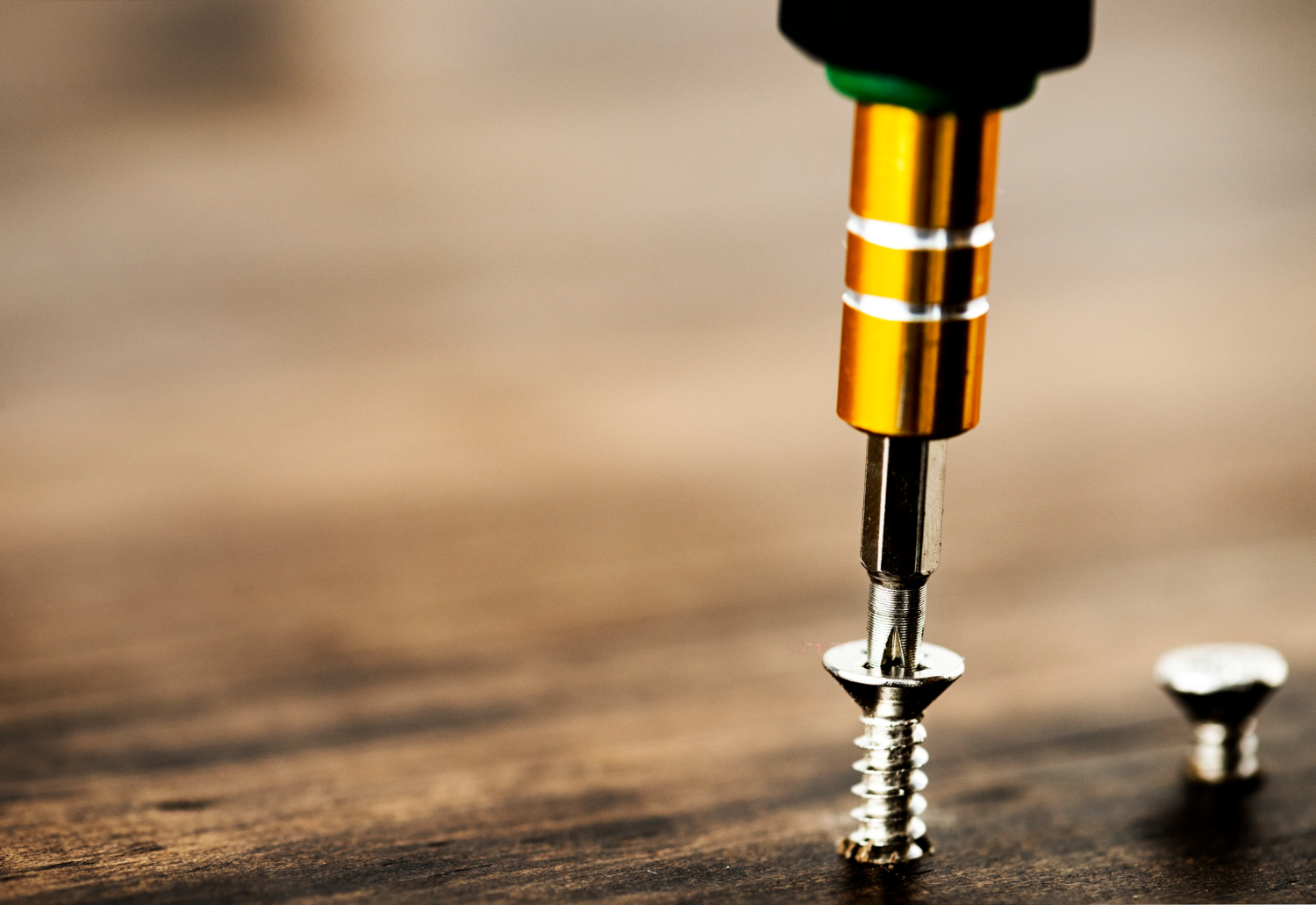
If you’re new to DIY projects or building your first toolbox, it’s easy to assume that a screwdriver and a drill driver do the same job. After all, both can drive screws into wood, drywall, or other materials. While that’s true, the way they accomplish the task—and the situations they’re best suited for—are quite different.
Knowing when to reach for a manual screwdriver and when to use a drill driver can make your projects faster, easier, and more precise. Here’s a closer look at what sets these two tools apart.
What Is a Screwdriver?
A screwdriver is one of the most basic and essential hand tools you’ll find in any toolbox. It uses manual force to tighten or loosen screws and comes in a variety of sizes and tip styles.
The most common types include:
- Phillips-head
- Flathead (slotted)
- Torx
- Hex
- Robertson (square)
Because you control the amount of pressure and torque by hand, screwdrivers are ideal for jobs that require precision rather than speed.
Best Uses for a Screwdriver
Manual screwdrivers are perfect for:
- Tightening loose cabinet hardware
- Installing switch plates
- Assembling furniture
- Adjusting door hinges
- Repairing electronics
- Small household fixes
They’re especially useful when working with delicate materials where too much force could strip a screw or crack the surface.
What Is a Drill Driver?
A drill driver is a cordless or corded power tool designed to both drill holes and drive screws. It uses a rechargeable battery or electrical power to rotate bits much faster than you could by hand.
Most drill drivers feature:
- Variable speed trigger
- Adjustable clutch settings
- Forward and reverse rotation
- Keyless chuck for changing bits
- Multiple torque settings
These features make a drill driver one of the most versatile tools for homeowners and DIY enthusiasts.
Key Differences
Although both tools drive screws, they excel in different situations.
Speed
A drill driver is dramatically faster than a manual screwdriver. Tasks that might take several minutes by hand can often be completed in seconds with a power tool.
If you’re assembling furniture, installing shelving, or building a deck, the time savings add up quickly.
Power
Manual screwdrivers rely entirely on your own strength. A drill driver, on the other hand, provides significantly more torque, allowing it to drive longer screws into dense materials with ease.
That added power is especially helpful when working with hardwoods or construction lumber.
Precision
Despite its lower power, a manual screwdriver offers greater control.
For delicate jobs involving electronics, decorative hardware, or soft materials, it’s much easier to avoid overtightening a screw when turning it by hand.
Many homeowners keep both tools nearby because each excels in different situations.
Versatility
A screwdriver performs one primary function: driving or removing screws.
A drill driver can:
- Drill pilot holes
- Drive screws
- Mix paint (with attachments)
- Sand small surfaces (using accessories)
- Polish certain materials
Changing bits takes only a few seconds, making it useful for a wide variety of projects.
When to Use a Manual Screwdriver
A traditional screwdriver remains the better choice when:
- Installing outlet covers
- Tightening cabinet knobs
- Repairing eyeglasses or electronics
- Working in tight spaces
- Making small adjustments
- Avoiding damage to fragile materials
It’s also quieter, doesn’t require batteries, and fits easily into compact toolboxes.
When to Use a Drill Driver
A drill driver is the better option when:
- Building furniture
- Hanging shelves
- Installing drywall
- Constructing decks
- Drilling holes
- Driving dozens of screws in a single project
If your project involves repetitive fastening, a drill driver can dramatically reduce both effort and completion time.
Understanding the Clutch
One of the most useful features on a drill driver is its adjustable clutch.
The clutch limits how much torque the tool applies before it stops turning. Lower settings help prevent screws from being driven too deeply, while higher settings provide extra power for tougher materials.
Learning to adjust the clutch is one of the quickest ways to improve your results and avoid stripped screws.
Do You Need Both?
For most homeowners, the answer is yes.
A drill driver handles larger jobs efficiently, while a manual screwdriver provides the precision needed for finishing touches and delicate repairs.
In fact, many experienced DIYers use both during the same project—starting with the drill driver for speed and finishing with a screwdriver to ensure everything is tightened just right.
Tips for Better Results
No matter which tool you’re using, a few simple habits can make your work easier:
- Match the screwdriver bit to the screw head.
- Drill pilot holes when working with hardwood.
- Let the tool do the work instead of forcing it.
- Replace worn or damaged bits to improve grip.
- Keep batteries charged if using a cordless drill driver.
These small steps help prevent stripped screws, damaged materials, and unnecessary frustration.
Choosing between a screwdriver and a drill driver isn’t really about deciding which one is better—it’s about selecting the right tool for the task at hand.
A manual screwdriver offers unmatched control for small, detailed jobs, while a drill driver delivers the speed and power needed for larger projects.
If you’re building a home repair toolkit, start with a quality set of screwdrivers and add a reliable cordless drill driver when your projects become more ambitious. Having both tools on hand means you’ll be prepared for everything from tightening a loose doorknob to building your next DIY masterpiece.